
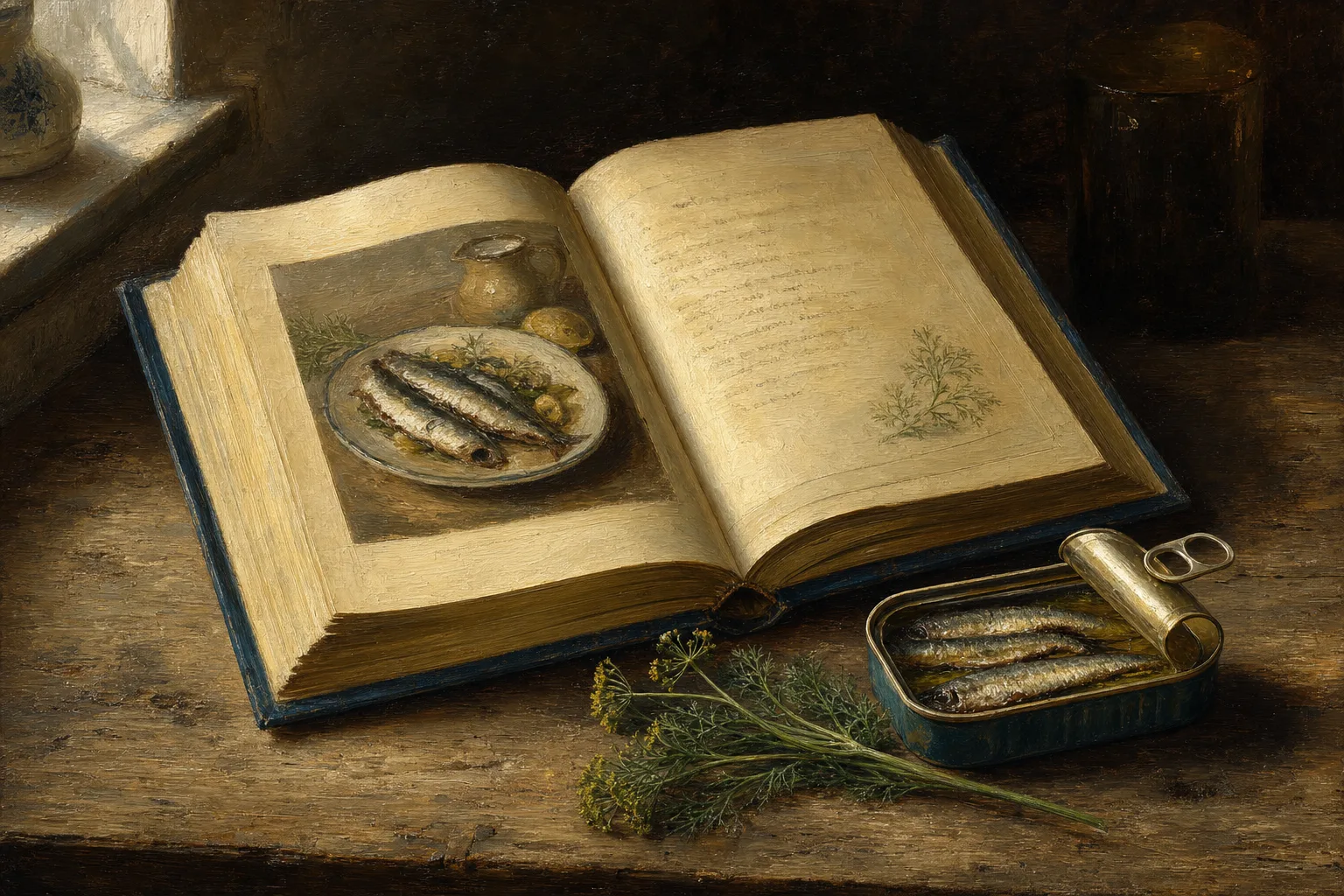
Every category has a founding document — the book that arrived before the trend and made the argument that later books only had to repeat. For conservas in English, that book is this one. Bart van Olphen, a Dutch chef who trained in Paris before opening the first sustainable fishmonger in Europe, spent years traveling to fishing communities from the Basque Country to the Yukon to understand what made preserved fish worth taking seriously. The Tinned Fish Cookbook is the result: 40 recipes organized around the premise that a tin is not a budget compromise but a finished ingredient. The premise sounds simple. In 2020, when the original US edition appeared, it was not obvious to most American readers.
Van Olphen’s background matters here. His Fish Tales company — the brand you now see at Whole Foods under the Sea Tales label — was built on the same logic as the book: that sustainable fishing and delicious eating are the same argument, not competing ones. He joined Jamie Oliver’s Food Tube channel because he could make that case on camera in ninety seconds, which is the same skill that makes this book work. The recipes are short, the rationale is clear, and the photography — David Loftus, who has shot for Oliver for decades — is arrestingly good. Top-down, close, honest. The fish looks like what it is.
The book is organized by species: tuna, salmon, mackerel, sardines, anchovies, herring, crab, cod liver. Each chapter opens with notes on what the fish is, why the tin form matters, and what to look for on a label. These are not long passages — a paragraph or two — but they do the work of teaching a reader to taste before they cook. The recipes that follow are European in their assumptions: tuna lasagna, mackerel frittata, pasta puttanesca with anchovies, sardine tart with tarragon. None of them ask you to dress the tin up or hide it. The tin is the point.
American readers accustomed to instructions should know: this book does not hand-hold. Recipes are written for someone who can already cook and trusts their palate. “Season to taste” appears often and means it. Instructions for a niçoise assume you know how to blanch a bean. The portions are typically for two, because van Olphen’s cooking is fundamentally about eating simply and well on a Tuesday rather than impressing twelve people on a Saturday. If that framing frustrates you, you want Anna Hezel’s book, which is reviewed elsewhere in this library. If it suits you, you will use this one until the spine fails.
The one honest critique is that the book’s sustainable-fishing argument occasionally tips into advocacy in a way that slows the recipes down. The species notes sometimes spend more time on MSC certification than on flavor. For a guide that exists to tell you what to buy and how to taste it, that’s a minor imbalance — the fish instruction is good enough that the mission-statement paragraphs are easy to skip. They are there because van Olphen genuinely believes them, and that conviction is part of what makes the book feel authoritative rather than opportunistic.
The Pavilion edition, which updated the original, is the one to buy if you can find it. The design is cleaner and the photography reproductions are better. But any edition of this book makes the same case, which is the case we exist to support: that a great tin, opened with some attention, is one of the better things you can eat. This book was the first to make that argument clearly in English. It remains the clearest version of it.
Where to buy
- Amazon Buy at Amazon
- Bookshop.org Buy at Bookshop.org
As an Amazon Associate, The Tin Guide earns from qualifying purchases.